
Asteria-H
Block 2 heavy-lift launch vehicle
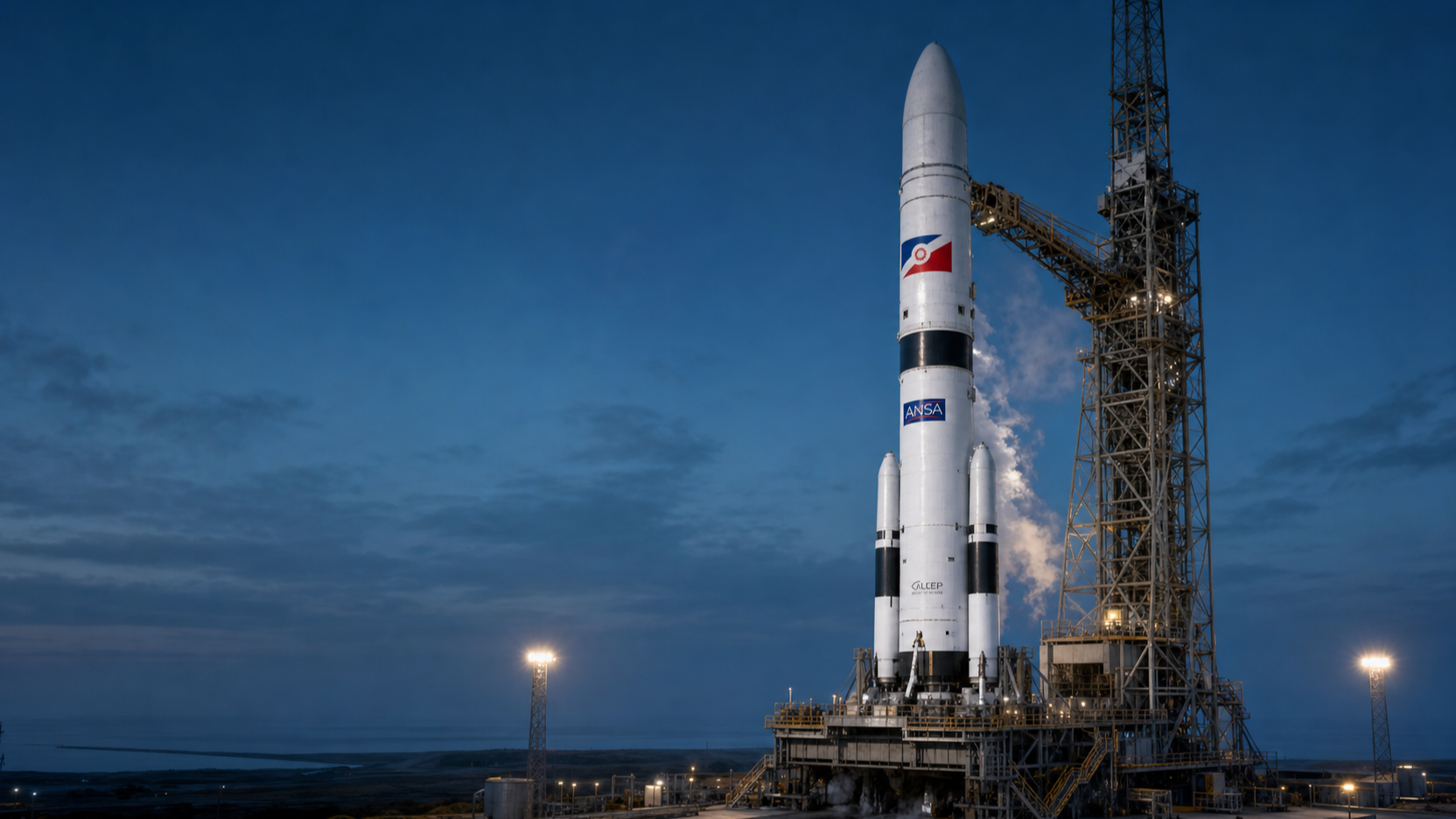
A three-stage crew-rated vehicle capable of placing 132 tonnes in low Earth orbit and 47 tonnes on a translunar trajectory.
111.2 m · 3,240 t · 36.9 MN An official website of the Republic of AinareAccessibilityEN
AINARE LUNAR EXPLORATION PROGRAM
A long-term campaign to explore the Moon with people and robotic systems, combining scientific return, crew safety, repeatable access and responsible stewardship.

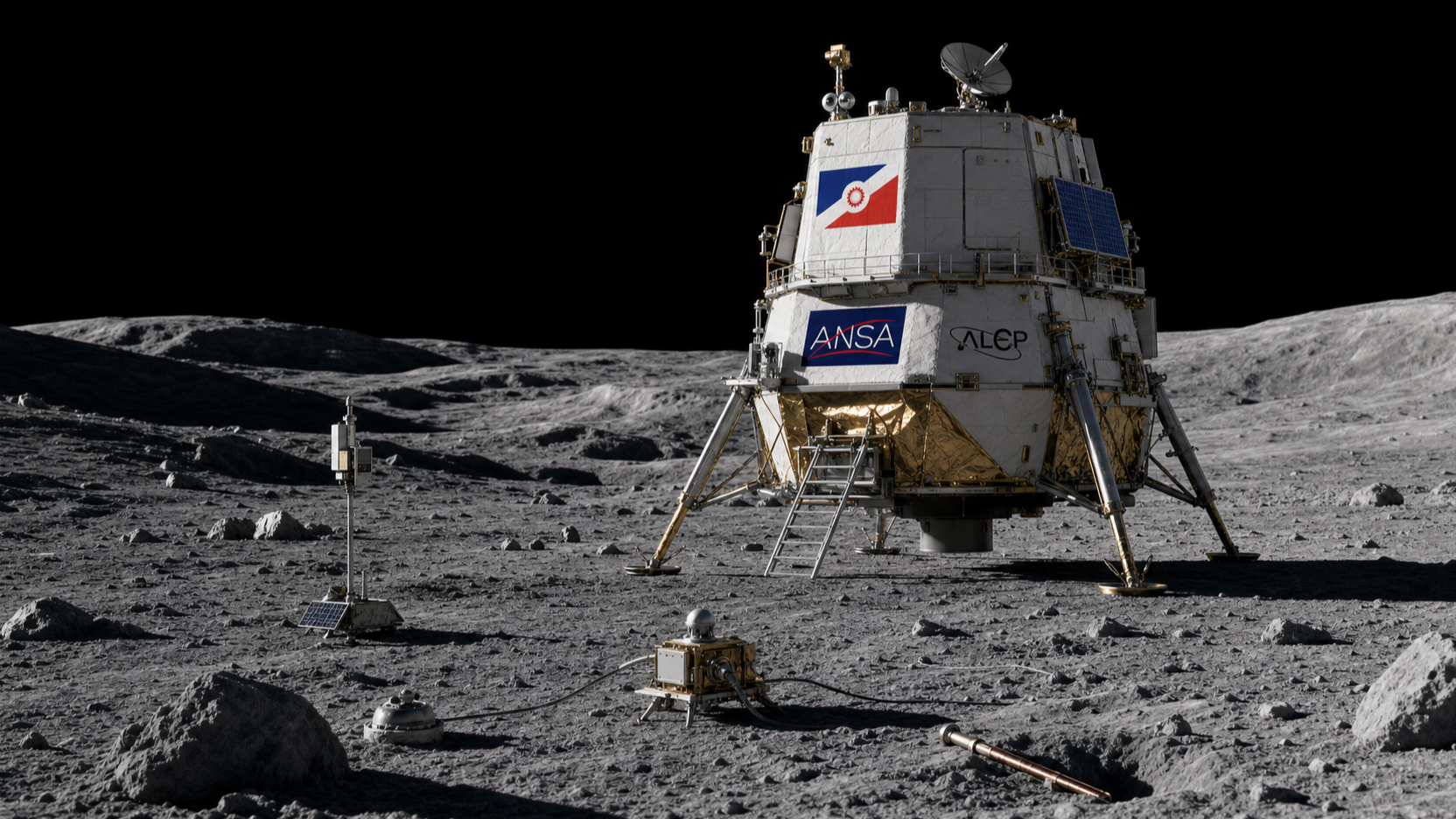
CURRENT CREWED MISSION
Conduct a crewed scientific expedition at the lunar south pole and certify the systems required for progressively longer surface operations.
MISSION BRIEF
Mission data current as of 16 July 2026. Dates remain subject to program and flight-readiness review.
ALEP 15 will send four crew members to lunar orbit. Wang Pintang and Chen Xiaoxuan will transfer to Dawn for a surface expedition at de Gerlache–Shackleton Ridge 2; Lei Xiao and Zhang Kaihao will remain aboard Resolve.
Two crew members descend to the surface
Approximately 22 hours total
Rook-1 unpressurized rover
Nine certified investigations
Documented and temperature-controlled
Near-polar lunar orbit
FLIGHT PLAN
The lander is already in lunar orbit. Crew and flight systems are completing final joint certification.
ALEP 15-L departed Cape Halcyon aboard Asteria-H.
Dawn entered its certified staging orbit and began commissioning.
Resolve, Asteria-H and mission-control teams are in final joint certification.
Target liftoff at 11:16 UTC, subject to flight-readiness review.
Dawn targets DGR-2 at 02:34 UTC.
Resolve targets Recovery Area 5 southeast of Ainare.
FLIGHT ARCHITECTURE
A modular architecture separates crew transport, lunar landing, surface mobility and relay communications.
A three-stage crew-rated vehicle capable of placing 132 tonnes in low Earth orbit and 47 tonnes on a translunar trajectory.
111.2 m · 3,240 t · 36.9 MNProvides Earth–Moon transport, lunar-orbit residence, rendezvous, high-energy re-entry and contingency shelter.
4 crew · 24 d independent · 180 d dockedA methane–oxygen descent and ascent system pre-deployed to lunar polar orbit by ALEP 15-L.
22.6 t wet · 2 crew · 8 d surfaceCarries geologic tools, a 2.5-m drill, sealed sample containers and a Beacon relay terminal.
2 crew · 25 km rated rangeALEP 15 CREW
The crew was assigned in March 2026 after completion of medical, systems and mission-role certification.
Full crew biographies↗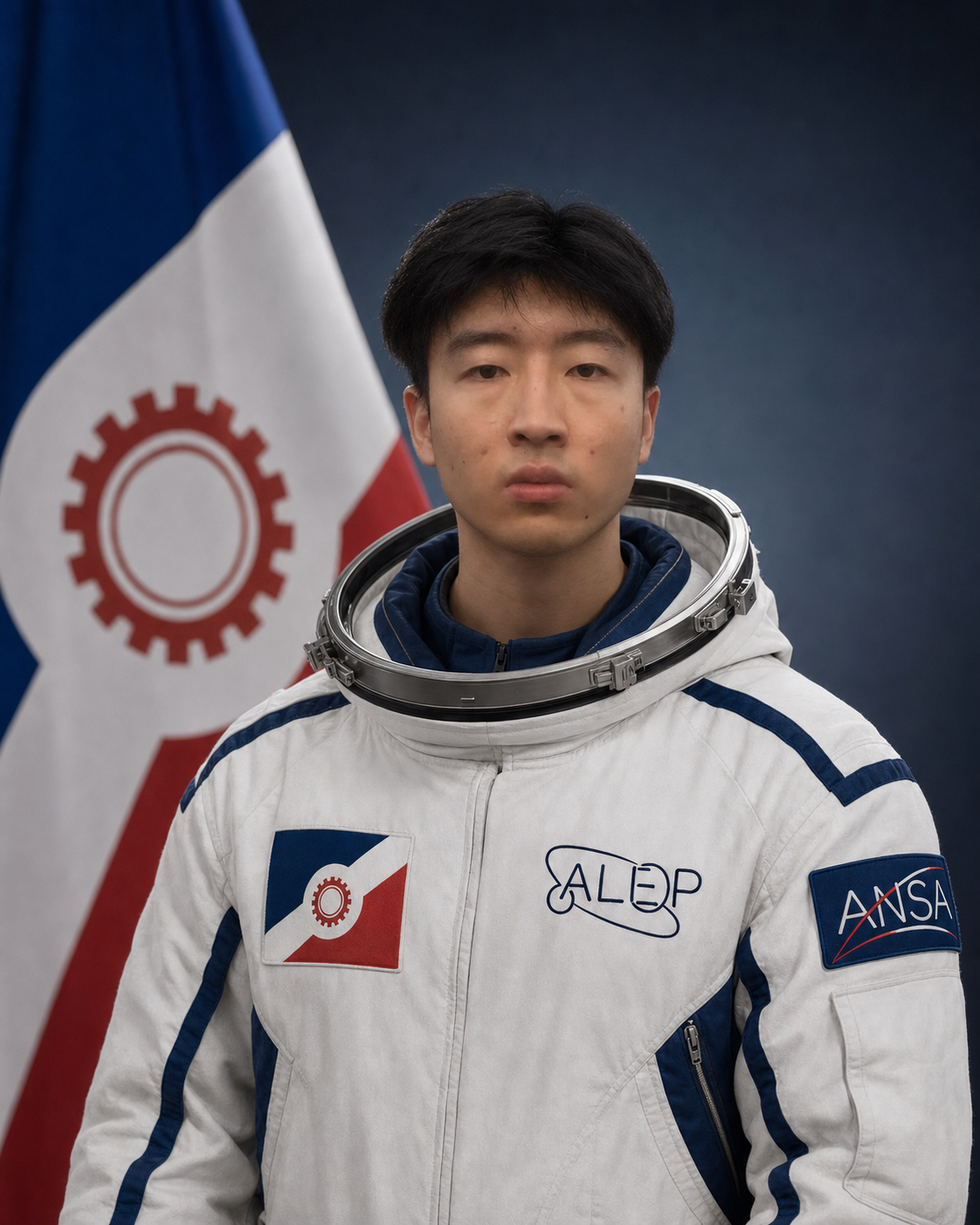 FP-01
FP-01王品棠
Surface commander · first EVA
 FP-02
FP-02陈潇漩
Surface science lead
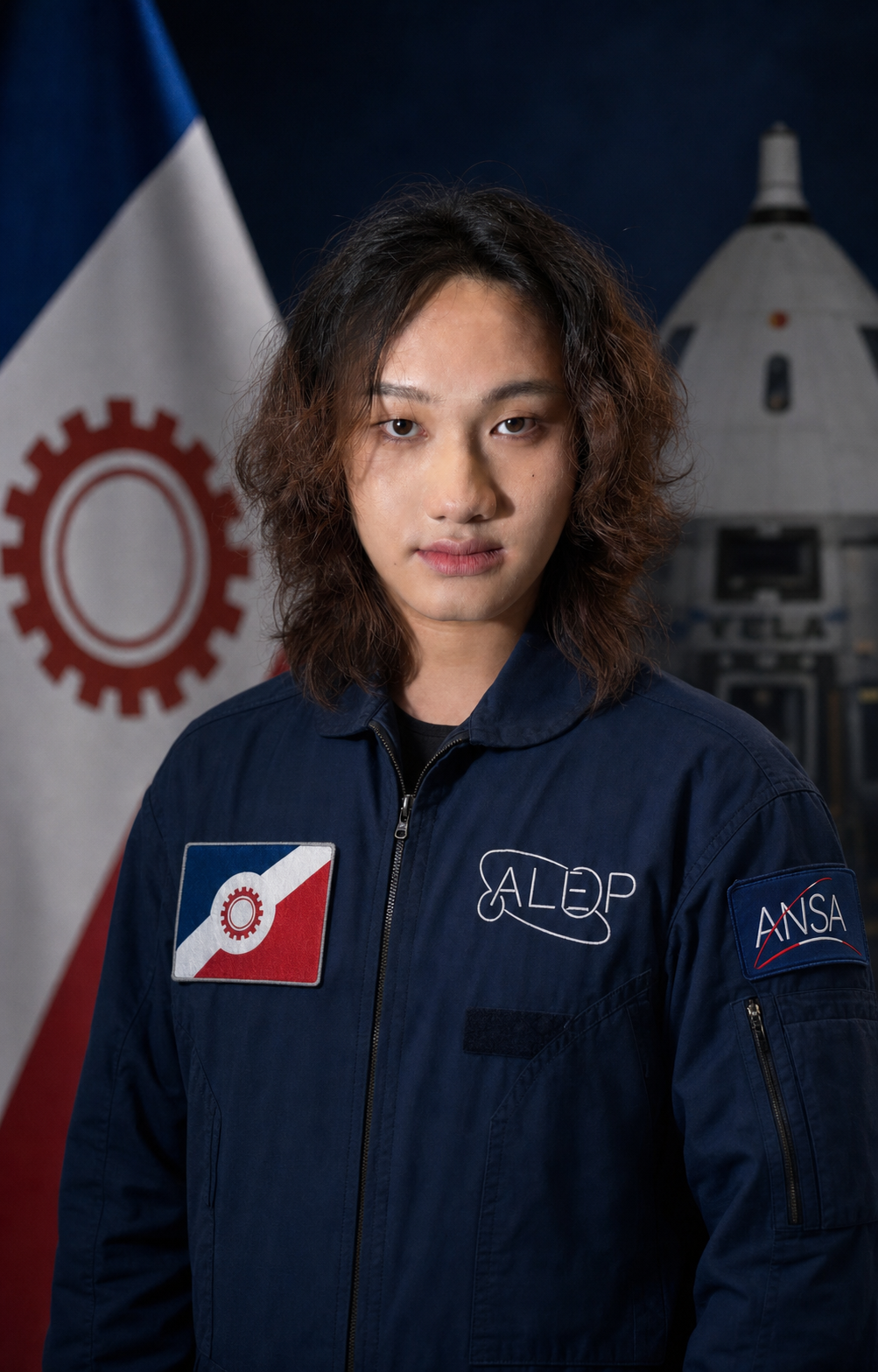 FP-03
FP-03雷宵
Lunar-orbit operations
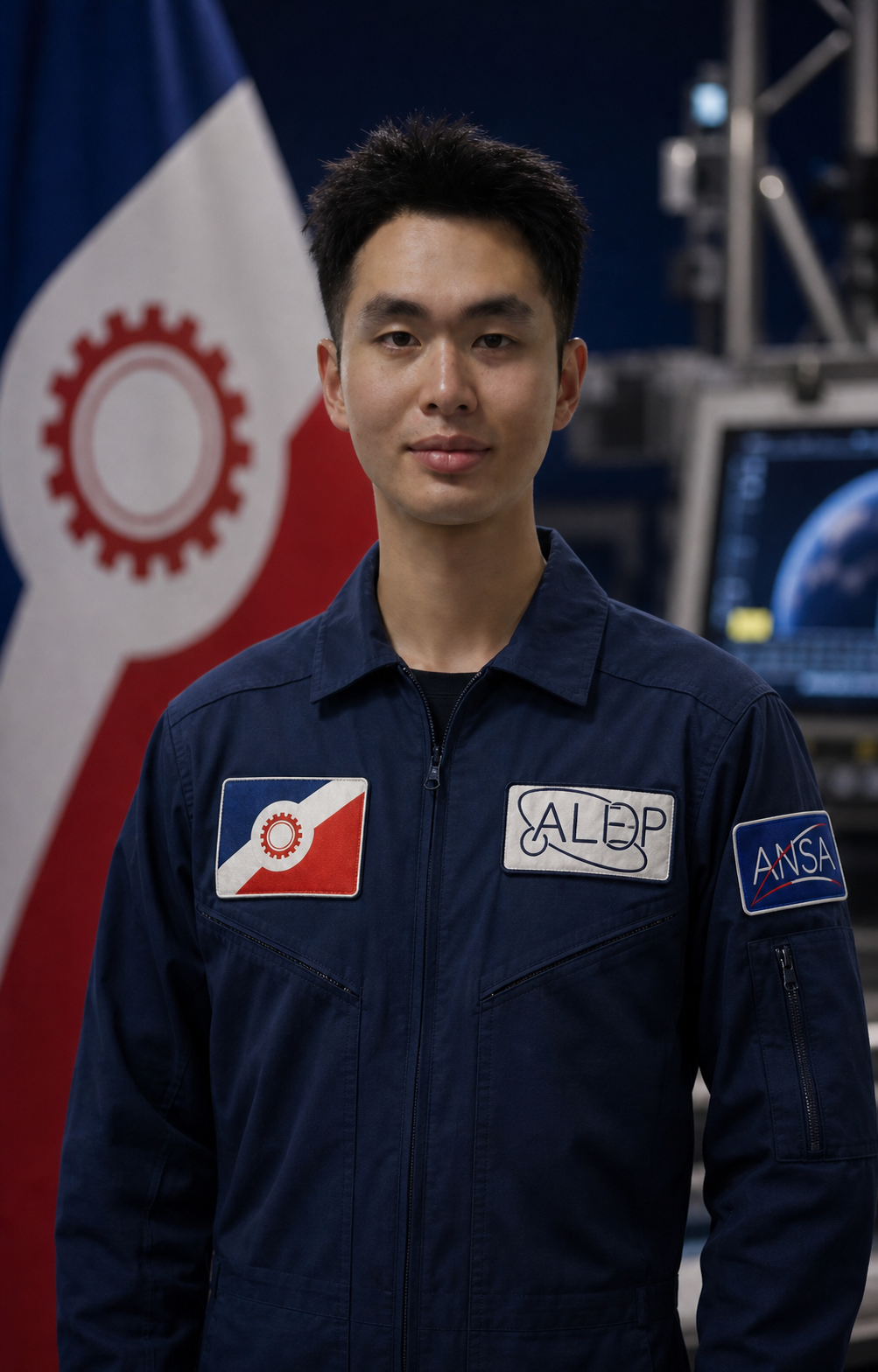 FP-04
FP-04章开皓
Flight engineering · robotics · crew medical
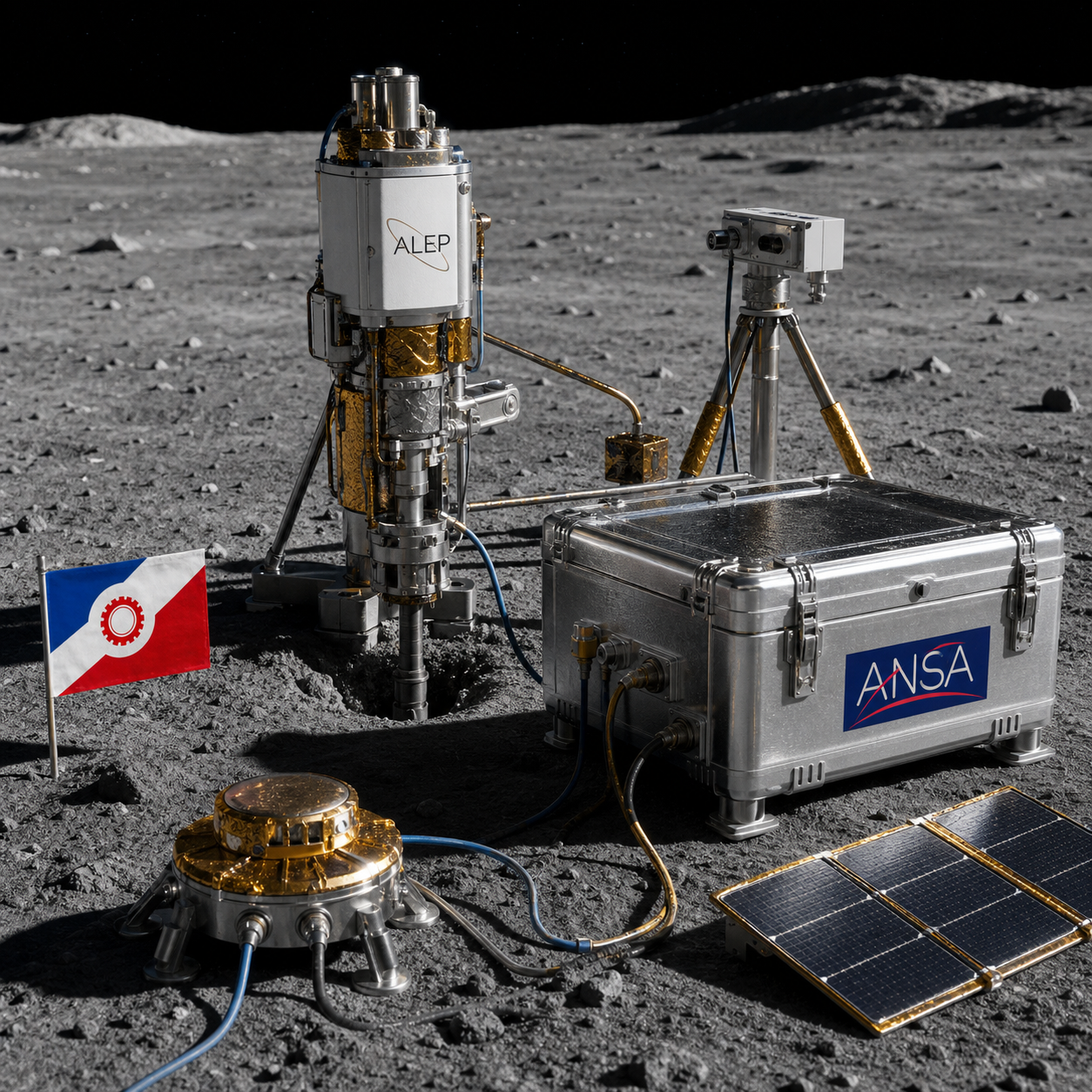
CONCEPT IMAGE · LUNAR POLAR SCIENCE PACKAGE
LUNAR SCIENCE
The DGR-2 site provides access to ancient crustal material, long-duration illumination and the edge of a permanently shadowed environment.
Measure the lateral and vertical distribution of south-polar volatiles.
Acquire cryogenically preserved regolith near a permanently shadowed region.
Deploy the Lunar Polar Science Package and a 2.5-m continuous core drill.
Characterize charged dust, adhesion and abrasion across a full surface cycle.
Validate polar navigation, continuous communications and long-range field operations.
Assess candidate infrastructure sites for ALEP 16 and later expeditions.
PROGRAM HISTORY
A program record that includes qualification flights, five landings, one landing cancellation, a fifty-year operational reserve and a modern renewal.
A phased national program for crewed lunar flight is approved on 4 March.
The first uncrewed command module completes high-energy re-entry and ocean recovery.
A crew completes lunar-orbit operations and a full landing rehearsal.
The world's first crewed lunar landing is completed on 23 December.
A landing is cancelled in lunar orbit after a propulsion-control discrepancy; the crew returns safely.
The fifth landing concludes the First Lunar Era with 118.6 kg of samples.
The government authorizes a modular, repeatable lunar exploration architecture.
The uncrewed Asteria-H and Vela end-to-end flight test is completed.
Four crew members complete 63 lunar orbits and remote surface robotics operations.
ANSA targets a six-day crewed expedition at the lunar south pole.
NEXT MAJOR EVENT
Final agency certification of the launch vehicle, spacecraft, crew, range and recovery system.